
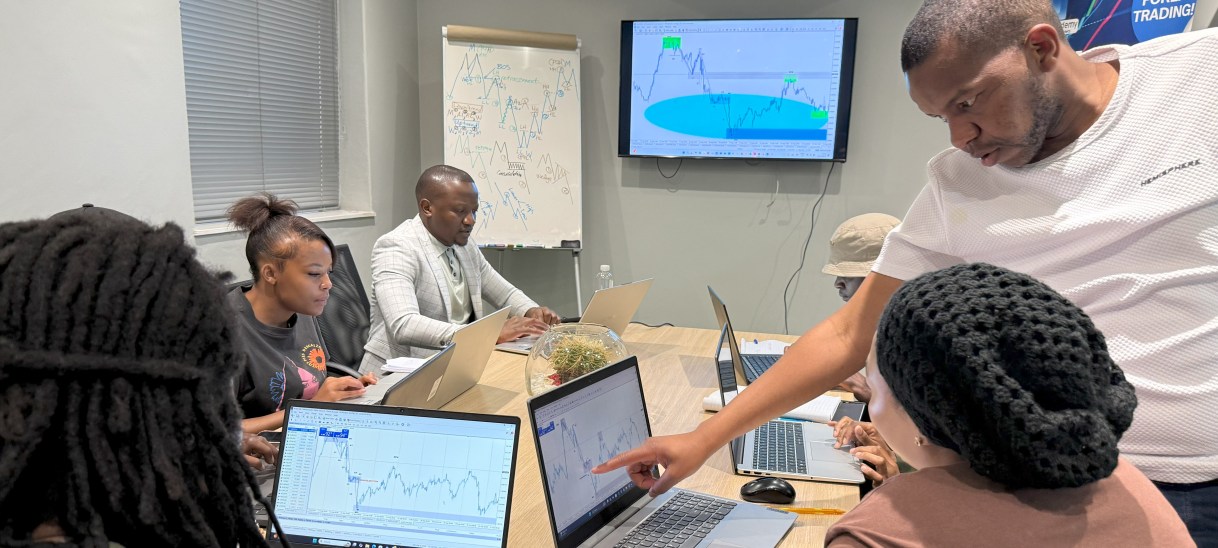

Your Trading Journey Begins here…
Please be sure to explore all our offers and choose how to define your financial future.
Welcome! Are you new to trading forex? Wealth Forex Academy is an academy where we teach people how to trade financial markets. If you’ve always wanted to learn to trade but have no idea where to begin, then this short beginners course (Intro To Forex) is for you.
What is Forex?
The foreign exchange market, which is usually known as “forex” or “FX,” is the largest financial market in the world.
The FX market is a global, decentralized market where the world’s currencies change hands. Exchange rates change by the second so the market is constantly in flux.
Only a tiny percentage of currency transactions happen in the “real economy” involving international trade and tourism.
Instead, most of the currency transactions that occur in the global foreign exchange market are bought (and sold) for speculative reasons.
Currency traders (also known as currency speculators) buy currencies hoping that they will be able to sell them at a higher price in the future.
Compared to the “measly” $22.4 billion per day volume of the New York Stock Exchange (NYSE), the foreign exchange market looks absolutely ginormous with its $6.6 TRILLION a day trade volume.


Exchange rate
An exchange rate is the relative price of two currencies from two different countries.
You find “Japanese yen” and think to yourself, “WOW! My one dollar is worth 100 yen?! And I have ten dollars! I’m going to be rich!!!”
When you do this, you’ve essentially participated in the forex market! You’ve exchanged one currency for another.
Or in forex trading terms, assuming you’re an American visiting Japan, you’ve sold dollars and bought yen.
Before you fly back home, you stop by the currency exchange booth to exchange the yen that you miraculously have remaining (Tokyo is expensive!) and notice the exchange rates have changed.
It’s these changes in the exchange rates that allow you to make money in the foreign exchange market.
What is traded in Forex?
The simple answer is MONEY. Specifically, currencies.
Because you’re not buying anything physical, forex trading can be confusing so we’ll use a simple (but imperfect) analogy to help explain.
Think of buying a currency as buying a share in a particular country, kinda like buying shares in a company.
The price of the currency is usually a direct reflection of the market’s opinion on the current and future health of its respective economy.
In forex trading, when you buy, say, the Japanese yen, you are basically buying a “share” in the Japanese economy.
You are betting that the Japanese economy is doing well, and will even get better as time goes.
Once you sell those “shares” back to the market, hopefully, you will end up with a profit.
In general, the exchange rate of a currency versus other currencies is a reflection of the condition of that country’s economy, compared to other economies.

Major currencies
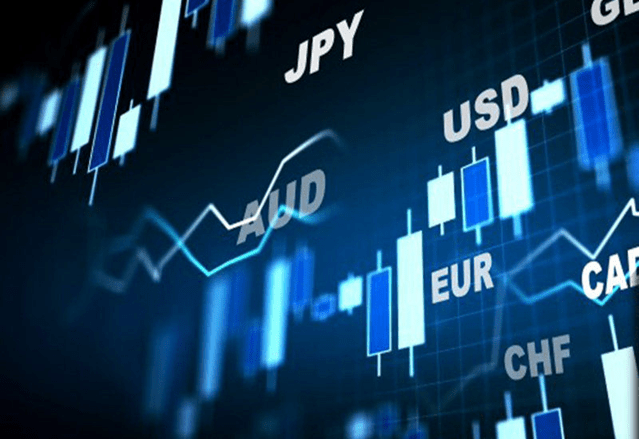
While there are potentially lots of currencies you can trade, as a new forex trader, you will probably start trading with the “major currencies“.
They’re called “major currencies” because they’re the most heavily traded currencies and represent some of the world’s largest economies.
Forex traders differ on what they consider as “major currencies”.
The uptight ones who probably got straight A’s and followed all the rules as children only consider USD, EUR, JPY, GBP, and CHF as major currencies.
Then they label AUD, NZD, and CAD as “commodity currencies“.
For us rebels, and to keep things simple, we just consider all eight currencies as the “majors”.
Currency symbols always have three letters, where the first two letters identify the name of the country and the third letter identifies the name of that country’s currency, usually the first letter of the currency’s name.
Example: USD. “US – United States” and “D – Dollar”.
Buying And Selling Currency Pairs
Forex trading is the simultaneous buying of one currency and selling another.
Currencies are traded through a “forex broker” or “CFD provider” and are traded in pairs. Currencies are quoted in relation to another currency.
For example, the euro and the U.S. dollar (EUR/USD) or the British pound and the Japanese yen (GBP/JPY).When you trade in the forex market, you buy or sell in currency pairs.
Imagine each currency pair constantly in a “tug of war” with each currency on its own side of the rope.
An exchange rate is the relative price of two currencies from two different countries.
Exchange rates fluctuate based on which currency is stronger at the moment.
There are three categories of currency pairs:
- The “majors“
- The “crosses“
- The “exotics“
The major currency pairs always include the U.S. dollar.
Cross-currency pairs do NOT include the U.S. dollar. Crosses that involve any of the major currencies are also known as ” minors”.
Exotic currency pairs consist of one major currency and one currency from an emerging market (EM).
Liquidity
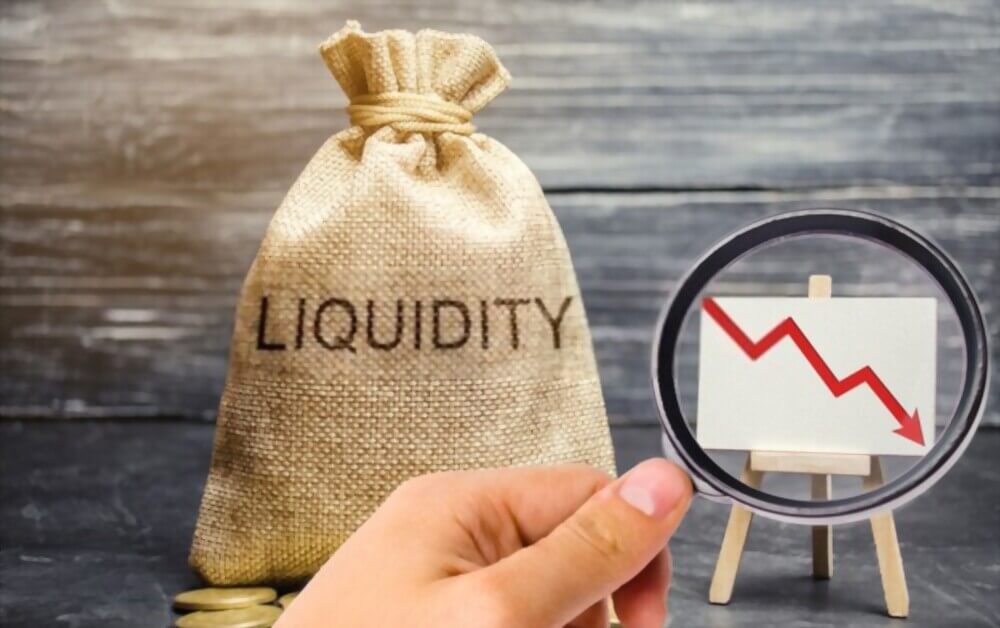
Liquidity describes the extent to which an asset can be bought and sold quickly, and at stable prices, and converted to cash.
Liquidity refers to how quickly and at what cost one can sell an asset, whether that is a financial asset such as a stock or a real asset such as a commercial building.
If one has an asset whose “true,” or fundamental, value is $100, and one can instantly convert that asset into $100 of cash or cash equivalent, then we think of the market for that asset as perfectly liquid.
Of course, such a perfectly liquid market is rarely observed in the world.
Liquidity is also used to measure how quickly a buyer of an asset can convert cash into that tangible asset.
So in a perfectly liquid market, someone who is looking to buy an asset whose fundamental value is $100 will be able to purchase that asset instantly for exactly $100 and receive it instantly.
It is a measure of how many buyers and sellers are present, and whether transactions can take place easily.
Usually, liquidity is calculated by taking the volume of trades or the volume of pending trades currently on the market.
Liquidity is considered “high” when there is a significant level of trading activity and when there is both high supply and demand for an asset, as it is easier to find a buyer or seller.
If there are only a few market participants, trading infrequently then liquidity is considered to be “low”. This is known as an illiquid market.
Forex Market Size
The bulk of forex trading takes place on what’s called the “interbank market“.
Unlike other financial markets like the New York Stock Exchange (NYSE) or London Stock Exchange (LSE), the forex market has neither a physical location nor a central exchange.
The forex market is considered an over-the-counter (OTC) market due to the fact that the entire market is run electronically, within a network of banks, continuously over a 24-hour period.This means that the FX market is spread all over the globe with no central location.
Trades can take place anywhere as long as you have an Internet connection!
The forex OTC market is by far the biggest and most popular financial market in the world, traded globally by a large number of individuals and organizations.
In an OTC market, participants determine who they want to trade with depending on trading conditions, the attractiveness of prices, and the reputation of the trading counterparty (the other party who takes the opposite side of your trade).

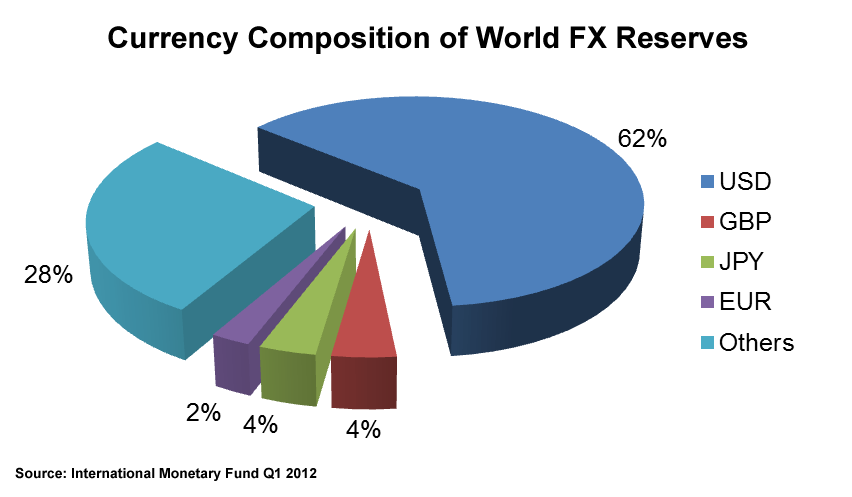
The Dollar is King in the Forex Market
The U.S. dollar is the most traded currency, making up 84.9% of all transactions! The euro’s share is second at 39.1%, while that of the yen is third at 19.0%. As you can see, most of the major currencies are hogging the top spots on this list!
You’ve probably noticed how often we keep mentioning the U.S. dollar (USD).If the USD is one-half of every major currency pair, and the majors comprise 75% of all trades, then it’s a must to pay attention to the U.S. dollar. The USD is king!
In fact, according to the International Monetary Fund (IMF), the U.S. dollar comprises roughly 62% of the world’s official foreign exchange reserves! Foreign exchange reserves are assets held on reserve by a central bank in foreign currencies.
Because almost every investor, business, and central bank own it, they pay attention to the U.S. dollar.
Speculation in the Forex Market
One important thing to note about the forex market is that while commercial and financial transactions are part of the trading volume, most currency trading is based on speculation.
In other words, most of the trading volume comes from traders that buy and sell based on the short-term price movements of currency pairs. The trading volume brought about by speculators is estimated to be more than 90%!
The scale of the forex market means that liquidity – the amount of buying and selling volume happening at any given time – is extremely high. This makes it very easy for anyone to buy and sell currencies.
From the perspective of a trader, liquidity is very important because it determines how easily price can change over a given time period. A liquid market environment like forex enables huge trading volumes to happen with very little effect on the price, or price action.
While the forex market is relatively very liquid, the market depth could change depending on the currency pair and time of day.
In our forex trading sessions, we’ll explain this in detail.

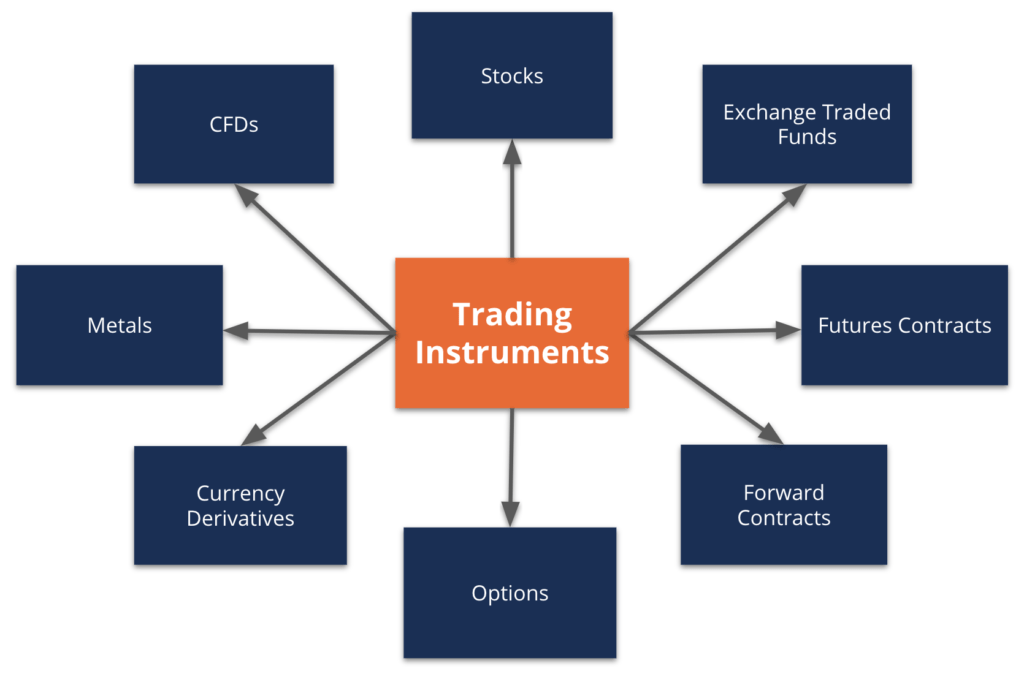
The Different Ways To Trade Forex
Because forex is so awesome, traders came up with a number of different ways to invest or speculate in currencies.
Among the financial instruments, the most popular ones are retail forex, spot FX, currency futures, currency options, currency exchange-traded funds (or ETFs), forex CFDs, and forex spread betting.
It’s important to point out that we are covering the different ways that individual (“retail”) traders can trade FX. Other financial instruments like FX swaps and forwards are not covered since they cater to institutional traders.
Futures are contracts to buy or sell a certain asset at a specified price on a future date (That’s why they’re called futures!).
An “option” is a financial instrument that gives the buyer the right or the option, but not the obligation, to buy or sell an asset at a specified price on the option’s expiration date.
A currency ETF offers exposure to a single currency or basket of currencies. ETF allow ordinary individuals to gain exposure to the forex market through a managed fund without the burdens of placing individual trades.
The spot FX market is an “off-exchange” market, also known as an over-the-counter (“OTC”) market. The forex market is a large, growing, and liquid financial market that operates 24 hours a day.
Spread betting is a derivative product, which means you don’t take ownership of the underlying asset but speculate on whichever direction you think its price will move up or down.
A forex CFD (Contract For Difference) is an agreement (“contract”) to exchange the difference in the price of a currency pair from when you open your position versus when you close it.
In our forex trading sessions, we’ll explain this in detail.
How to Make Money Trading Forex
Placing a trade in the foreign exchange market is simple. The mechanics of a trade are very similar to those found in other financial markets (like the stock market), so if you have any experience in trading, you should be able to pick it up pretty quickly.
And if you don’t, you’ll still be able to pick it up….as long as you attend our forex trading course!
The objective of forex trading is to exchange one currency for another in the expectation that the price will change. More specifically, that the currency you bought will increase in value compared to the one you sold.
Here’s an example:
You purchase 10,000 euros at the EUR/USD exchange rate of 1.1800. Two weeks later, you exchange your 10,000 euros back into U.S. dollar at the exchange rate of 1.2500. You earn a profit of $700
Base and Quote Currency
Currencies are always quoted in pairs, such as GBP/USD or USD/JPY. The reason they are quoted in pairs is that, in every foreign exchange transaction, you are simultaneously buying one currency and selling another.
How do you know which currency you are buying and which you are selling? Excellent question! This is where the concepts of base and quote currencies come in.
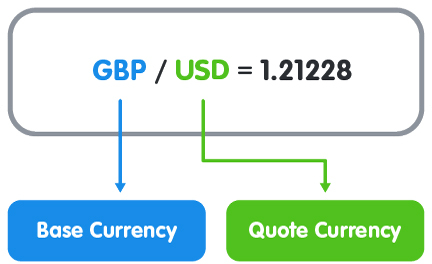
Whenever you have an open position in forex trading, you are exchanging one currency for another. Currencies are quoted in relation to other currencies. Here is an example (picture on the left) of a foreign exchange rate for the British pound versus the U.S. dollar.
The first listed currency to the left of the slash (“/”) is known as the base currency (in this example, the British pound). The base currency is the reference element for the exchange rate of the currency pair. It always has a value of one.
The second listed currency on the right is called the counter or quote currency (in this example, the U.S. dollar).
When buying, the exchange rate tells you how much you have to pay in units of the quote currency to buy ONE unit of the base currency. In the example above, you have to pay 1.21228 U.S. dollars to buy 1 British pound.
When selling, the exchange rate tells you how many units of the quote currency you get for selling ONE unit of the base currency. In the example above, you will receive 1.21228 U.S. dollars when you sell 1 British pound.
“Long” and “Short”
First, you should determine whether you want to buy or sell.
If you want to buy (which actually means buy the base currency and sell the quote currency), you want the base currency to rise in value and then you would sell it back at a higher price.
In trader talk, this is called “going long” or taking a “long position.” Just remember: long = buy.
If you want to sell (which actually means sell the base currency and buy the quote currency), you want the base currency to fall in value and then you would buy it back at a lower price.
This is called “going short” or taking a “short position”.
Just remember: short = sell.

The Bid, Ask and Spread
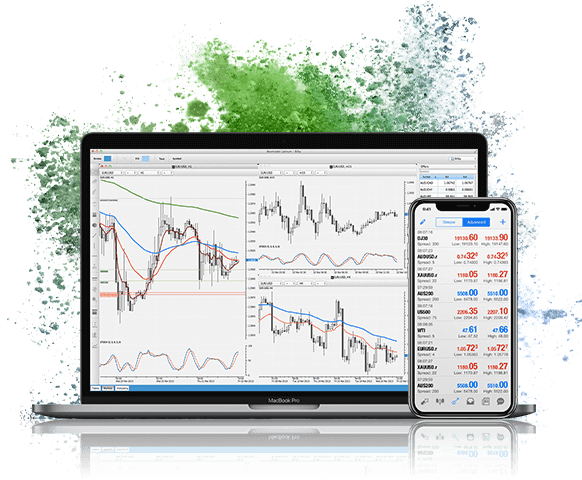
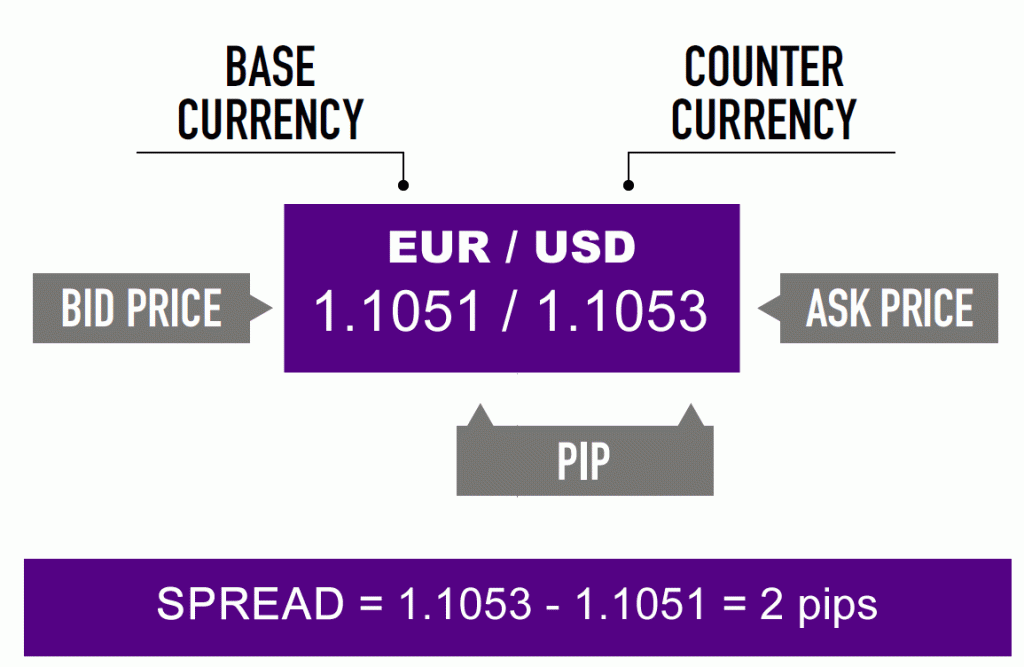
All forex quotes are quoted with two prices: the bid and ask. In general, the bid is lower than the ask price.
The bid is the price at which your broker is willing to buy the base currency in exchange for the quote currency. This means the bid is the best available price at which you (the trader) can sell to the market. If you want to sell something, the broker will buy it from you at the bid price.
The ask is the price at which your broker will sell the base currency in exchange for the quote currency. This means the ask price is the best available price at which you can buy from the market. Another word for ask is the offer price.
The difference between the bid and the ask price is known as the SPREAD; in this example 2 pips.
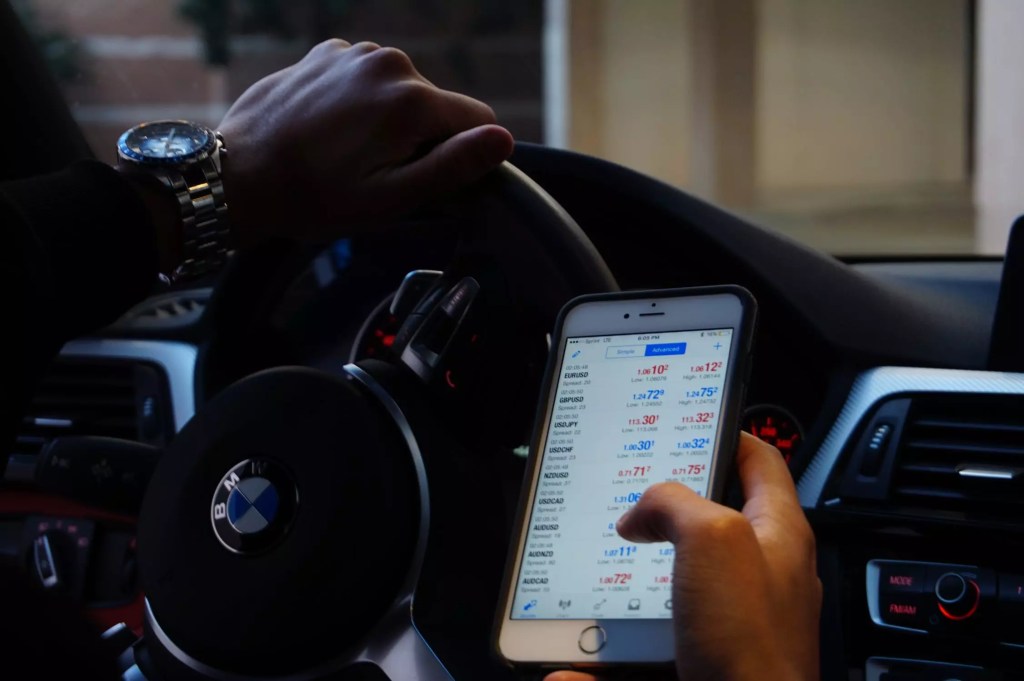
On the GBP/USD quote (picture on the left), the bid price is 1.3089 and the ask price is 1.3091. Look at how this broker makes it so easy for you to trade away your money.
- If you want to sell GBP, you click “Sell” and you will sell pounds at 1.3089.
- If you want to buy GBP, you click “Buy” and you will buy poundss at 1.3091.
Know When to Buy or Sell a Currency Pair
Forex trading involves trying to predict which currency will rise or fall versus another currency.
How do you know when to buy or sell a currency pair?
In the following example, we are going to use a little fundamental analysis to help us decide whether to buy or sell a specific currency pair. The supply and demand for a currency changes due to various economic factors, which drives currency exchange rates up and down.
Each currency belongs to a country (or region). So forex fundamental analysis focuses on the overall state of the country’s economy, such as productivity, employment, manufacturing, international trade, and interest rates.
GBPUSD – If you think the British economy will continue to do better than the U.S. in terms of economic growth, you would execute a BUY GBP/USD order. By doing so you have bought pounds with the expectation that it will rise versus the U.S. dollar.
If you believe the British economy is slowing while the American economy remains strong like Chuck Norris, you would execute a SELL GBP/USD order. By doing so you have sold pounds with the expectation that it will depreciate against the U.S. dollar.
However, fundamental analysis alone are not enough. They must be combined with technical analysis in deciding whether to buy/sell. That’s where the trading strategies taught in our forex trading course can prove to be helpful.
Margin Trading
“But I don’t have enough money to buy 10,000 euros! Can I still trade?”
You can! By using leverage.
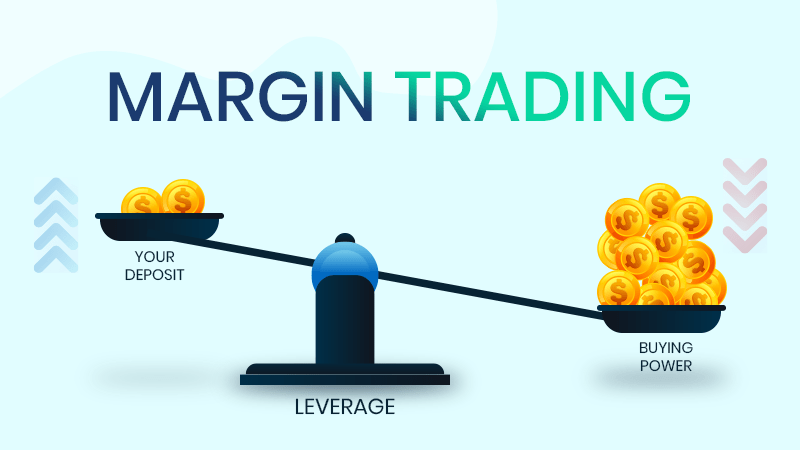
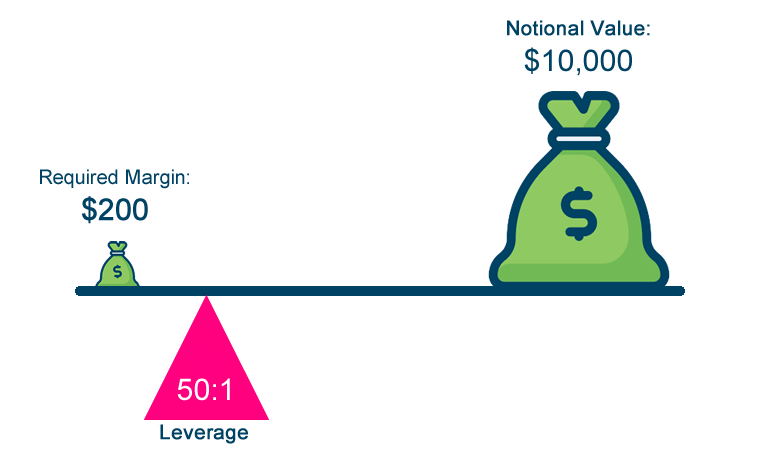
When you trade with leverage, you wouldn’t need to pay the 10,000 euros upfront. Instead, you’d put down a small “deposit”, known as margin. Leverage is the ratio of the transaction size (“position size”) to the actual cash (“trading capital”) used for margin.
For example, 50:1 leverage, also known as a 2% margin requirement, means $2,000 of margin is required to open a position size worth $100,000. Margin trading lets you open large position sizes using only a fraction of the capital you’d normally need.
This is how you’re able to open $1,250 or $50,000 positions with as little as $25 or $1,000. You can conduct relatively large transactions with a small amount of initial capital.
When you decide to close a position, the deposit (“margin”) that you originally made is returned to you and a calculation of your profits or losses is done. This profit or loss is then credited to your account.
A small margin deposit can lead to large losses as well as gains. It also means that a relatively small movement can lead to a proportionately much larger movement in the size of any loss or profit which can work against you as well as for you.
For example, you open a forex trading account with a small deposit of $1,000. Your broker offers 100:1 leverage so you open a $100,000 EUR/USD position. A move of just 100 pips will bring your account to $0! A 100-pip move is equivalent to €1! You blew your account with a price move of a single euro.
Rollover (Swap Fee)
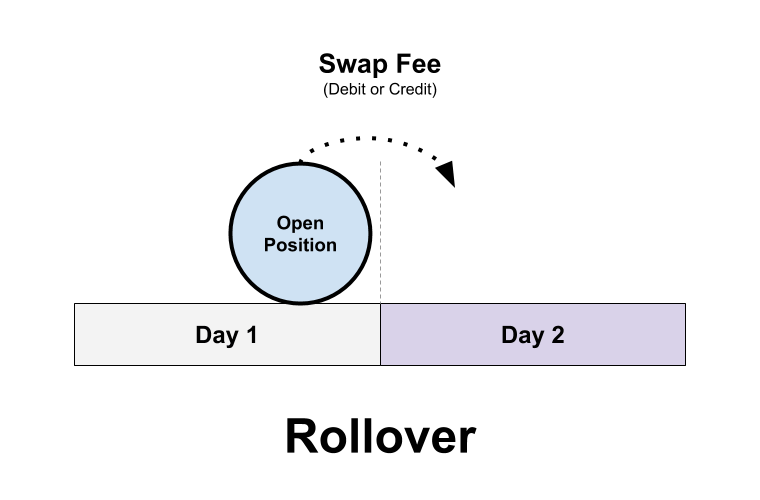
For positions open at your broker’s “cut-off time” (usually 5:00 pm ET. 12am SAT), there is a daily “rollover fee“, also known as a “swap fee” that a trader either pays or earns, depending on the positions you have open.
If you do not want to earn or pay interest on your positions, simply make sure they are all closed before 5:00 pm ET (12am SAT), the established end of the market day.
Since every currency trade involves borrowing one currency to buy another, interest rollover charges are part of forex trading.
Interest is PAID on the currency that is borrowed.
Interest is EARNED on the one that is bought.
If you are buying a currency with a higher interest rate than the one you are borrowing, then the net interest rate differential will be positive (i.e. USD/JPY) and you will earn interest as a result. Conversely, if the interest rate differential is negative then you will have to pay.
Note that many retail forex brokers do adjust their rollover rates based on different factors (e.g., account leverage, interbank lending rates). Please check with your broker for more information on their specific rollover rates and crediting/debiting procedures.
What is a Pip in Forex?
Here is where we’re going to do a little math. Just a little bit.
You’ve probably heard of the terms “pips,” “points“, “pipettes,” and “lots” thrown around, and now we’re going to explain what they are and show you how their values are calculated.
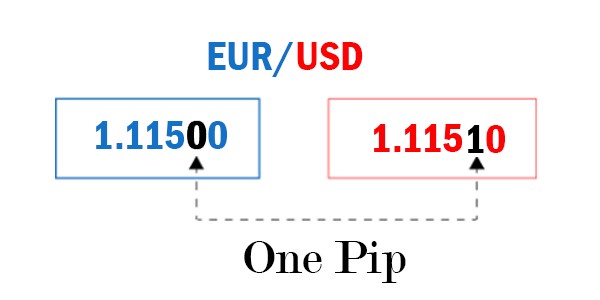
Pip – The unit of measurement to express the change in value between two currencies.
If EUR/USD moves from 1.1150 to 1.1151, that .0001 USD rise in value is 1 PIP. A pip is usually the last decimal place of a price quote.
Most pairs go out to 4 decimal places, but there are some exceptions like Japanese yen pairs (they go out to two decimal places). For example, for EUR/USD, it is 0.0001, and for USD/JPY, it is 0.01.
What is a Pipette?
There are forex brokers that quote currency pairs beyond the standard “4 and 2” decimal places to “5 and 3” decimal places. They are quoting FRACTIONAL PIPS, also called “points” or “pipettes.”
A “point” or “pipette” or “fractional pip” is equal to a “tenth of a pip“. For instance, if GBP/USD moves from 1.30542 to 1.30543, that .00001 USD move higher is ONE PIPETTE.
How to Find the Pip Value in Your Trading Account’s Currency
The final question to ask when figuring out the pip value of your position is, “What is the pip value in terms of my trading account’s currency? After all, it is a global market and not everyone has their account denominated in the same currency.
This means that the pip value will have to be translated to whatever currency our account may be traded in. This calculation is probably the easiest of all; simply multiply/divide the “found pip value” by the exchange rate of your account currency and the currency in question.
If the “found pip value” currency is the same currency as the base currency in the exchange rate quote:
Using a GBP/JPY example, let’s convert the found pip value of .813 GBP to the pip value in USD by using GBP/USD at 1.5590 as our exchange rate ratio.
If the currency you are converting to is the counter currency of the exchange rate, all you have to do is divide the “found pip value” by the corresponding exchange rate ratio:
.813 GBP x 1.5590 USD = 1.2674 USD per pip move
So, for every .01 pip move in GBP/JPY, the value of a 10,000 unit position changes by approximately 1.27 USD.
If the currency you are converting to is the base currency of the conversion exchange rate ratio, then multiply the “found pip value” by the conversion exchange rate ratio.
Using a USD/CAD example, we want to find the pip value of .98 USD in New Zealand Dollars. We’ll use .7900 as our conversion exchange rate ratio:
(0.98 USD) / (.7900 USD) = 1.2405 NZD per pip move
For every .0001 pip move in USD/CAD from the example above, your 10,000 unit position changes in value by approximately 1.24 NZD.

What is a Lot in Forex?
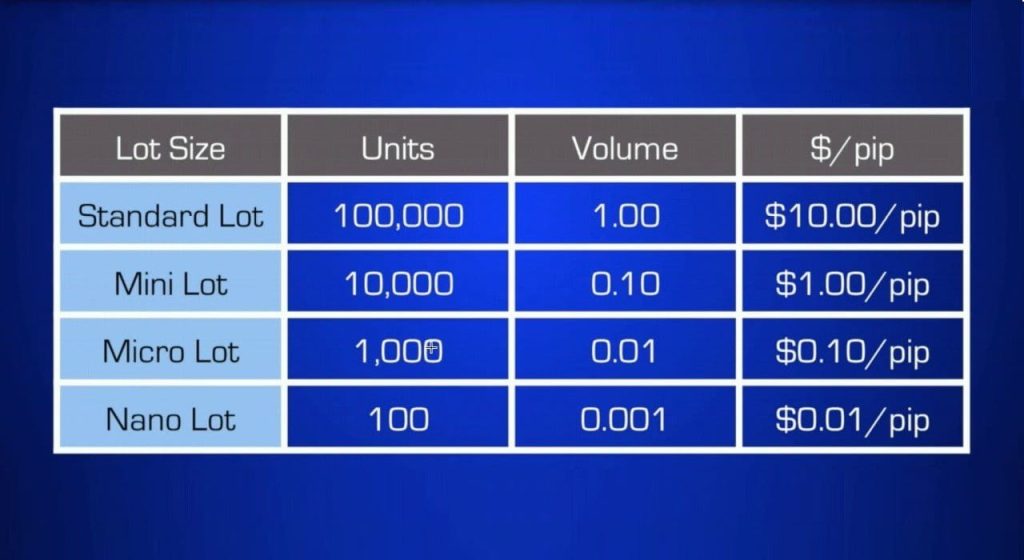
Forex is commonly traded in specific amounts called lots, or basically the number of currency units you will buy or sell.
A “lot” is a unit measuring a transaction amount.
When you place orders on your trading platform, orders are placed in sizes quoted in lots. It’s like an egg box. When you buy eggs, you usually buy a box. One box includes 12 eggs.
The standard size for a lot is 100,000 units of currency, and now, there are also mini, micro, and nano lot sizes that are 10,000, 1,000, and 100 units.
Some brokers show quantity in “lots”, while other brokers show the actual currency units. As you may already know, the change in a currency value relative to another is measured in “pips,” which is a very, very small percentage of a unit of currency’s value.
To take advantage of this minute change in value, you need to trade large amounts of a particular currency in order to see any significant profit or loss. Let’s assume we will be using a 100,000 unit (standard) lot size. We will now recalculate some examples to see how it affects the pip value.
- USD/JPY at an exchange rate of 119.80: (.01 / 119.80) x 100,000 = $8.34 per pip
- USD/CHF at an exchange rate of 1.4555: (.0001 / 1.4555) x 100,000 = $6.87 per pip
In cases where the U.S. dollar is not quoted first, the formula is slightly different.
- EUR/USD at an exchange rate of 1.1930: (.0001 / 1.1930) X 100,000 = 8.38 x 1.1930 = $9.99734 rounded up will be $10 per pip
- GBP/USD at an exchange rate of 1.8040: (.0001 / 1.8040) x 100,000 = 5.54 x 1.8040 = 9.99416 rounded up will be $10 per pip.
Your broker may have a different convention for calculating pip values relative to lot size but whatever way they do it, they’ll be able to tell you what the pip value is for the currency you are trading at that particular time.
In other words, they do all the math calculations for you! As the market moves, so will the pip value depending on what currency you are currently trading.
What is leverage?
You are probably wondering how a small investor like yourself can trade such large amounts of money.
Think of your broker as a bank who basically fronts you $100,000 to buy currencies. All the bank asks from you is that you give it $1,000 as a good faith deposit, which it will hold for you but not necessarily keep.
The amount of leverage you use will depend on your broker and what you feel comfortable with. Typically the broker will require a deposit, also known as “margin“. Once you have deposited your money, you will then be able to trade. The broker will also specify how much margin is required per position (lot) traded.
For example, if the allowed leverage is 100:1 (or 1% of position required), and you wanted to trade a position worth $100,000, but you only have $5,000 in your account. No problem as your broker would set aside $1,000 as a deposit and let you “borrow” the rest.
Of course, any losses or gains will be deducted or added to the remaining cash balance in your account. The minimum security (margin) for each lot will vary from broker to broker. In the example above, the broker required a 1% margin. This means that for every $100,000 traded, the broker wants $1,000 as a deposit on the position.
Let’s say you want to buy 1 standard lot (100,000) of USD/JPY. If your account is allowed 100:1 leverage, you will have to put up $1,000 as margin. The $1,000 is NOT a fee, it’s a deposit. You get it back when you close your trade. The reason the broker requires the deposit is that while the trade is open, there’s the risk that you could lose money on the position!
Assuming that this USD/JPY trade is the only position you have open in your account, you would have to maintain your account’s equity (absolute value of your trading account) of at least $1,000 at all times in order to be allowed to keep the trade open.
If USD/JPY plummets and your trading losses cause your account equity to fall below $1,000, the broker’s system would automatically close out your trade to prevent further losses. This is a safety mechanism to prevent your account balance from going negative.

How to calculate profit and loss
So now that you know how to calculate pip value and leverage, let’s look at how you calculate your profit or loss.
Let’s buy U.S. dollars and sell Swiss francs. The rate you are quoted is 1.4525 / 1.4530. Because you are buying U.S. dollars you will be working on the “ASK” price of 1.4530, the rate at which traders are prepared to sell.
So you buy 1 standard lot (100,000 units) at 1.4530. A few hours later, the price moves to 1.4550 and you decide to close your trade.
The new quote for USD/CHF is 1.4550 / 1.4555. Since you initially bought to open the trade, to close the trade, you now must sell in order to close the trade so you must take the “BID” price of 1.4550. The price that traders are prepared to buy at.
The difference between 1.4530 and 1.4550 is .0020 or 20 pips. Using our formula from before, we now have:
(.0001/1.4550) x 100,000 = $6.87 per pip x 20 pips = $137.40
What is a Spread in Forex Trading?
Forex brokers will quote you two different prices for a currency pair: the bid and ask price.
The “bid” is the price at which you can SELL the base currency.
The “ask” is the price at which you can BUY the base currency.
The difference between these two prices is known as the spread. Also known as the “bid/ask spread“. The spread is how “no commission” brokers make their money. This spread is the fee for providing transaction immediacy. This is why the terms “transaction cost” and “bid-ask spread” are used interchangeably.
Instead of charging a separate fee for making a trade, the cost is built into the buy and sell price of the currency pair you want to trade. From a business standpoint, this makes sense. The broker provides a service and has to make money somehow.
- They make money by selling the currency to you for more than they paid to buy it.
- And they also make money by buying the currency from you for less than they will receive when they sell it.
- This difference is called the spread.
It’s just like if you were trying to sell your old iPhone to a store that buys used iPhones. In order to make a profit, it will need to buy your iPhone at a price lower than the price it’ll sell it for. If it can sell the iPhone for $500, then if it wants to make any money, the most it can buy from you is $490. That difference of $10 is the spread.
So when a broker claims “zero commissions” or “no commission”, it’s misleading because while there is no separate commission fee, you still pay a commission. It’s just built into the bid/ask spread!

What Types of Spreads are in Forex?
The type of spreads that you’ll see on a trading platform depends on the forex broker and how they make money.
There are two types of spreads: Fixed and Variable (also known as “floating”)
Fixed spreads are usually offered by brokers that operate as a market maker or “dealing desk” model while variable spreads are offered by brokers operating a “non-dealing desk” model.
Fixed spreads stay the same regardless of what market conditions are at any given time. In other words, whether the market is volatile like or quiet, the spread is not affected. It stays the same.
Using a dealing desk, the broker buys large positions from their liquidity provider(s) and offers these positions in smaller sizes to traders. This means that the broker acts as the counterparty to their clients’ trades. Having a dealing desk, allows the forex broker to offer fixed spreads because they are able to control the prices they display to their clients.
Fixed spreads have smaller capital requirements, so trading with fixed spreads offers a cheaper alternative for traders who don’t have a lot of money to start trading with. It also makes calculating transaction costs more predictable. Since spreads never change, you’re always sure of what you can expect to pay when you open a trade.
Requotes can occur frequently when trading with fixed spreads since pricing is coming from just one source (your broker). There will be times when the forex market is volatile and prices are rapidly changing. Since spreads are fixed, the broker won’t be able to widen the spread to adjust for current market conditions.
So if you try to enter a trade at a specific price, the broker will “block” the trade and ask you to accept a new price. You will be “re-quoted” with a new price. It’s almost always a price that is worse than the one you ordered.
Variable spreads are always changing. With variable spreads, the difference between the bid and ask prices of currency pairs is constantly changing. Non-dealing desk brokers get their pricing of currency pairs from multiple liquidity providers and pass on these prices to the trader without the intervention of a dealing desk.
This means they have no control over the spreads. And spreads will widen or tighten based on the supply and demand of currencies and the overall market volatility. Typically, spreads widen during economic data releases as well as other periods when the liquidity in the market decreases.
Types of Forex Orders
An order is an offer sent using your broker’s trading platform to open or close a transaction if the instructions specified by you are satisfied. Basically, the term “order” refers to how you will enter or exit a trade.
Here we discuss the different types of orders that can be placed in the forex market. Be sure that you know which types of orders your broker accepts. Different brokers accept different types of forex orders.
Orders fall into two buckets:
- Market order: an order instantly executed against a price that your broker has provided.
- Pending order: an order to be executed at a later time at the price you specify.
A market order is an order to buy or sell at the best available price. For example, the bid price for EUR/USD is currently at 1.1640 and the ask price is at 1.1642. If you wanted to buy EUR/USD at market, then it would be sold to you at the price of 1.1642. You would click buy and your trading platform would instantly execute a buy order at that exact price (hopefully).
Please keep in mind that depending on market conditions, there may be a difference between the price you selected and the final price that is executed (or “filled”) on your trading platform.
A limit order is an order placed to either buy below the market or sell above the market at a certain price. This is an order to buy or sell once the market reaches the “limit price”.
- You place a “Buy Limit” order to buy at or below a specified price.
- You place a “Sell Limit” order to sell at a specified price or better.
Once the market reaches the “limit price” the order is triggered and executed at the “limit price” (or better).
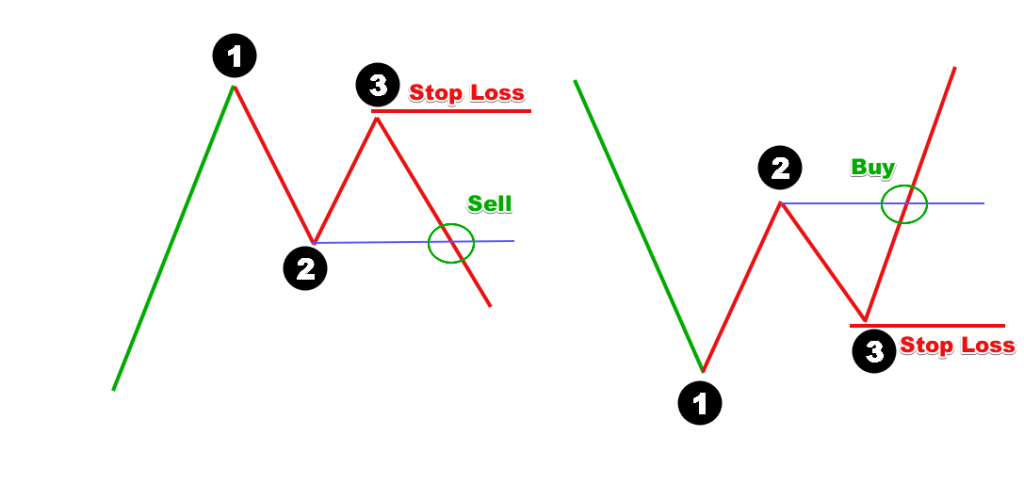
A stop order “stops” an order from executing until price reaches a stop price. You would use a stop order when you want to buy only after price rises to the stop price or sell only after the price falls to the stop price.
A stop entry order is an order placed to buy above the market or sell below the market at a certain price.
- You place a “Buy Stop” order to buy at a price above the market price, and it is triggered when the market price touches or goes through the Buy Stop price.
- You place a “Sell Stop” order to sell when a specified price is reached.

Stop Loss Order
An order to close out if the market price reaches a specified price, which may represent a loss or profit. A stop loss order is a type of order linked to a trade for the purpose of preventing additional losses if the price goes against you.
A stop loss order remains in effect until the position is liquidated or you cancel the stop loss order.
For example, you went long (buy) EUR/USD at 1.1630. To limit your maximum loss, you set a stop loss order at 1.1600. This means if you were dead wrong and EUR/USD drops to 1.1600 instead of moving up, your trading platform would automatically execute a sell order at 1.1600 the best available price and close out your position for a 30-pip loss.
Stop losses are extremely useful if you don’t want to sit in front of your monitor all day worried that you will lose all your money. You can simply set a stop loss order on any open positions so you may attend to your other commitments.
Trailing Stop
A stop loss order which is always attached to an open position and which automatically moves once profit becomes equal to or higher than a level you specify. A trailing stop is a type of stop loss order attached to a trade that moves as the price fluctuates.
Let’s say that you’ve decided to short GBP/USD at 1.3780, with a trailing stop of 20 pips. This means that originally, your stop loss is at 1.3800. If the price goes down and hits 1.3760, your trailing stop would move down to 1.3800 (or breakeven).
Going back to the example, with a trailing stop of 20 pips, if GBP/USD hits 1.3740, then your stop would move to 1.3760 (or lock in 20 pips profit). Your trade will remain open as long as the price does not move against you by 20 pips.
Once the market price hits your trailing stop price, a market order to close your position at the best available price will be sent and your position will be closed.
Trading a Demo account
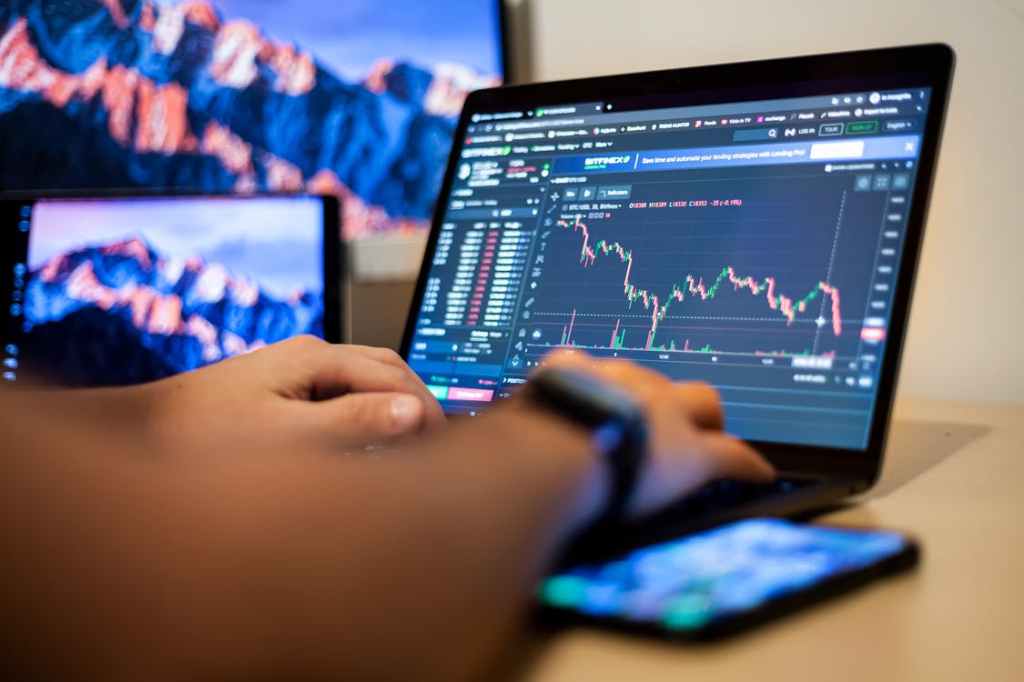
Demo account is a practice account. You can open a demo account for FREE with most forex brokers. These practice accounts have most of the capabilities of a “real” account.
But why is it free? It’s because the broker wants you to learn the ins and outs of their trading platform, and have a good time trading without risk, so you’ll fall in love with them and deposit real money.
The demo account allows you to learn about the mechanics of forex trading and test your trading skills and processes with ZERO risk. You should demo trade until you develop a solid, profitable system before you even think about putting real money on the line.
Do NOT open a live trading account until you are CONSISTENTLY trading PROFITABLY on a demo account. If you can’t wait until you’re profitable on a demo account, then there’s very little chance you’ll be profitable live when real money and emotions are factored in.
In the beginning of your trading journey, you need time to focus on improving your trading processes and creating good habits. You’ll also need to experience different market environments and learn how to adjust your methods and strategies as market behavior changes.
You can be a winner at currency trading, but as with all other aspects of life, it will take hard work, dedication, consistency, and a whole lot of patience and good judgment.
Can You Get Rich By Trading Forex?
We are going to be 100% honest with you and tell you that ALL Forex traders lose money on some trades.
Ninety percent of traders lose money, largely due to lack of planning, training, discipline, not having a trading edge and having poor money management rules. Hence, we encourage you to join our Forex trading course so you can be taught how to trade Forex successfully.
If you hate to lose or are a super perfectionist, you’ll also probably have a hard time adjusting to trading because all traders lose a trade at some point or another.
The forex market is one of the most popular markets for speculation, due to its enormous size, liquidity, and the tendency for currencies to move in strong trends. You would think traders all over the world would make a killing, but success has been limited to a very small percentage of traders.
The problem is that many traders come with the misguided hope of making a million bucks, but in reality, they lack the discipline required for really learning the art of trading.
Most people usually lack the discipline to go to the gym three times a week. If you can’t even do that, how do you think you’re going to succeed one of the most difficult, but financially rewarding, endeavors known to man?
Short term trading IS NOT for amateurs, and it is rarely the path to “get rich quick”. You can’t make gigantic profits without taking gigantic risks. A trading strategy that involves taking a massive degree of risk means suffering inconsistent trading performance and large losses.
A trader who does this probably doesn’t even have a trading strategy – unless you call gambling a trading strategy!
Forex trading is a skill that takes time to learn. Skilled traders can and do make money in this field. However, like any other occupation or career, success doesn’t just happen overnight.
Forex trading isn’t a piece of cake (as some people would like you to believe). Think about it, if it was, everyone trading would already be millionaires. The truth is that even expert traders with years of experience still encounter periodic losses.
Like our head mentor, Watson Mathevula, would drill this to the hundreds of students’ heads at Wealth Forex Academy that there are NO shortcuts in Forex trading. Success will require a lot from you. It takes lots of practice and experience to master. There is no substitute for hard work, deliberate practice, and diligence.
Practice trading on a demo account until you find a method that you know inside and out, and can comfortably execute objectively. Basically, find the way that works for you! Our Forex trading course can help you with exactly that.
Congratulations on completing this short beginners course (Intro To Forex). We trust the content was helpful.
Important Notice!!
The knowledge shared on this website is only for educational purposes. Therefore, it does not act as financial advice. The purpose of this short beginners course (Intro To Forex) is to simply equip aspiring traders with basic trading concepts, so they can understand and have an idea what Forex trading is about.
The knowledge covered here is just a little introduction to Forex Trading, readily available online for free, it does not even amount to 3% of the trading knowledge covered in our Forex trading course and the trading experience from our trading community. These are just few basics to get you started with your Forex trading journey. Therefore it’s not enough to make you a profitable trader.
If you wish to become a profible trader, then you still need more intermediate and advanced knowledge, for example:
- Trading Strategies to use;
- How to technically analyse the market;
- How to analyse fundamentals;
- How to customise a trading methodology;
- Learn different trading styles (Scalping, Day-Trading, Swing-Trading and Position Trading);
- How to execute and manage a trade;
- Accurate entry and exit levels;
- How to actively protect yout trading capital (Effective money management);
- Learning market structure;
- Learn the behavioural patterns of different trading instruments;
- Learn the different reversal patterns;
- How to analyse candlesticks patterns amd market conditions;
- Learn how to master trading psychology;
- Learn factors driving major currencies;
- A step-by-step trading checklist;
- Timeframe correlation;
- Market participants and their objectives;
- Market traps and mistakes;
- Psychological zones;
- How to do market research and development;
- Learn different trading sessions;
- Best trading hours and days;
- Access to additional trading classes (webinars);
- Access to consult with a mentor;
- Added to our trading groups;
- Receive study materials;
- and more….
If you wish learn and receive all listed above (WFA full course), we encourage you to join our Forex trading course to learn more about trading and become an advanced trader and enjoy the full benefits of our lifetime mentorship. The role of a mentor is to help cut-short your learning curve.
Exclusive Offer
Get up to 33% off your WFA Trading Course
Who doesn’t like a discount? Subscribe with us today and receive an exclusive offer.
 Wealth Forex Academy